
Why identity is more than a label
A compelling offer at first glance
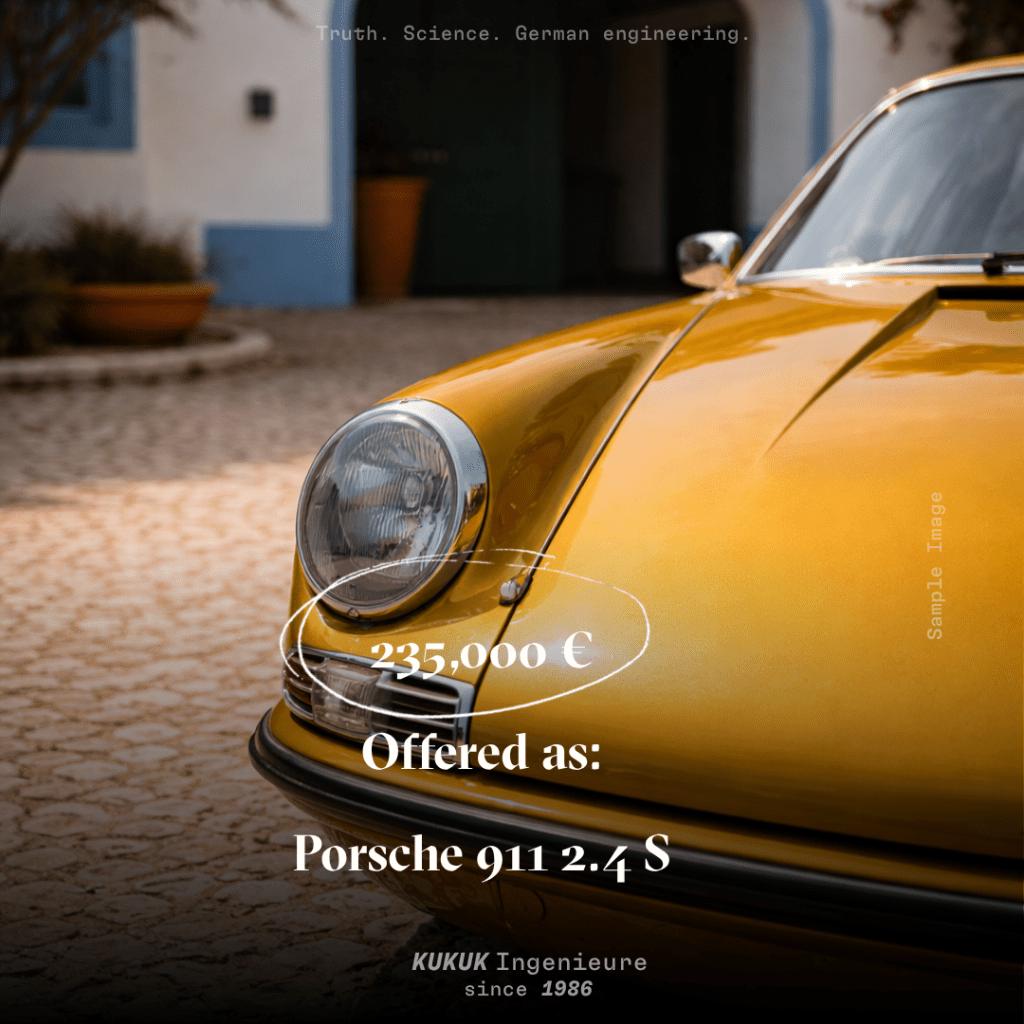
A Porsche 911 was as 2.4 S Offered.
Price, presentation and overall impression were exactly what you would expect from such a vehicle.
At first glance, everything seemed to be in order:
- The documentation seemed consistent
- The history seemed plausible
- The configuration matched the model offered
- The vehicle was technically and visually impressive
This is exactly how purchasing decisions are made in the collector car market.
And this is precisely where the risk begins.
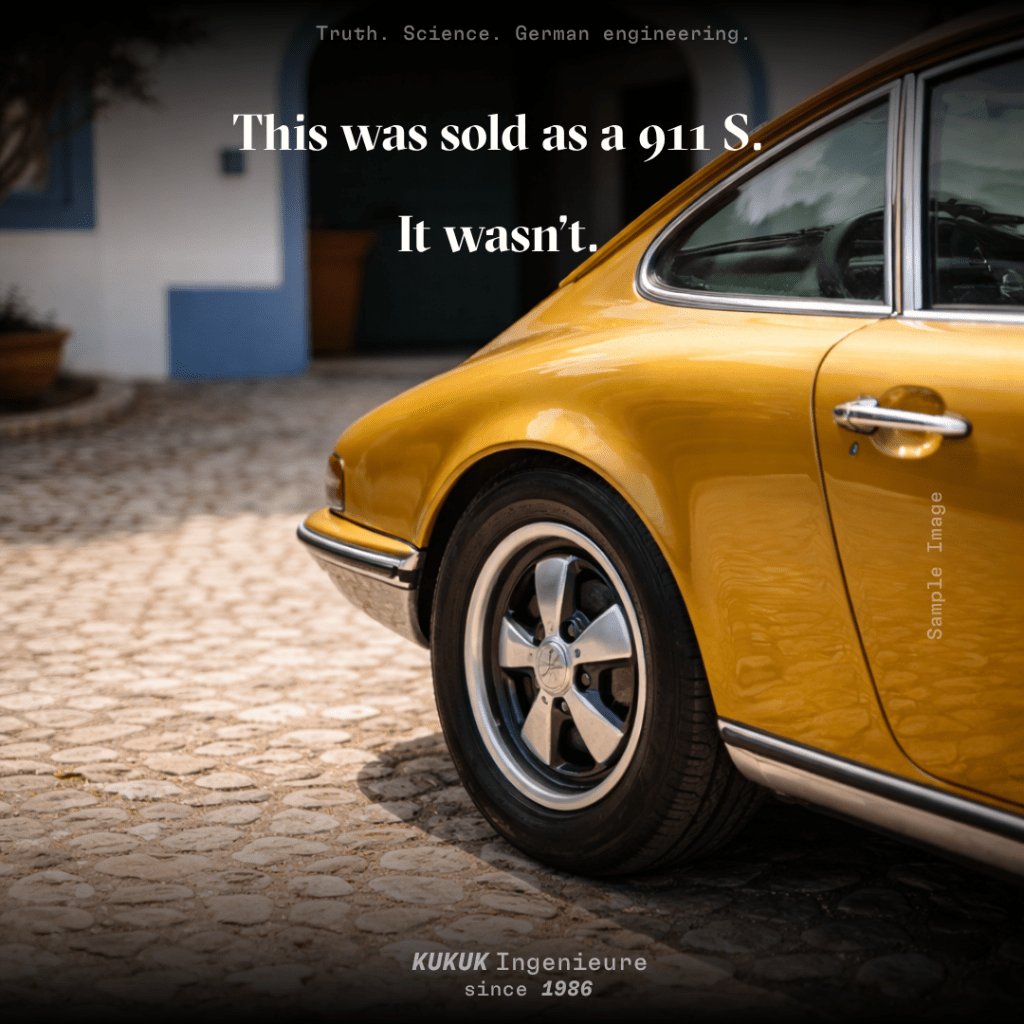
The central problem: Trust does not replace verification
In many cases, a purchasing decision is based on a seemingly logical overall picture.
When documentation, condition and occurrence align, trust is built.
But
Trust is not proof.
The crucial question is not:
„Is the vehicle working correctly?“
Rather
„Is it technically and structurally correct?“
The investigation: What is actually checked
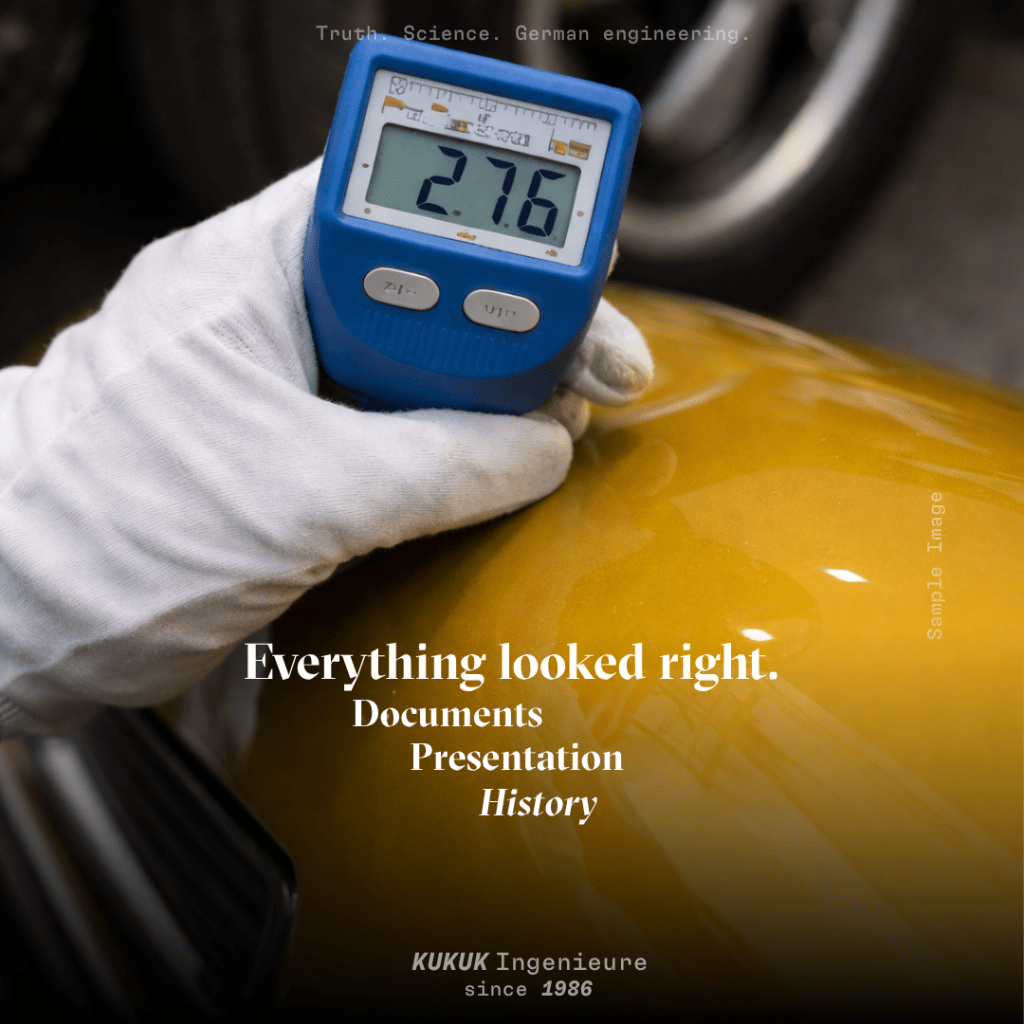
As part of a structured Pre-Purchase Inspection (PPI), not only is the condition assessed, but the Vehicle identity verified.
This means specifically:
- Reconciliation of production data
- Analysis of the technical components
- Assessing the Consistency between Documentation and Substance
- Review of model-typical characteristics
In this case, it quickly became apparent:
The overall picture was convincing, but not correct.
The key findings
- The technical analysis revealed:
- The vehicle corresponded not a Porsche 911 S,
- but was based on a:
- 👉 Porsche 911 T with S specification features
- That means:
- A lower-positioned base model has been configured to visually and partially technically match a higher-quality model.
- Further notes clearly confirmed this assessment:
- Missing rear stabiliser, an essential feature of the S variant
- Production number, which could be clearly assigned to a 911 T
- The vehicle was logically constructed.
- but the underlying identity was different.
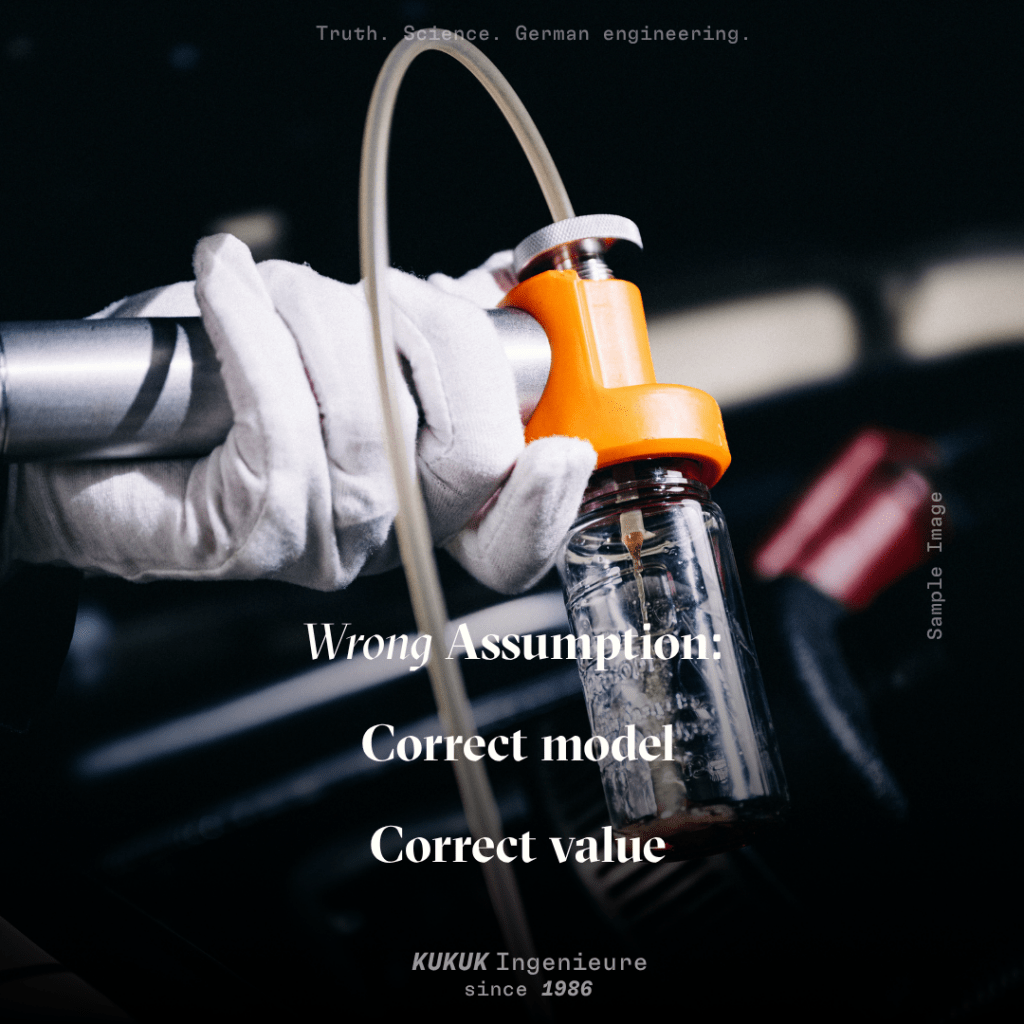
Why this is crucial: The value logic
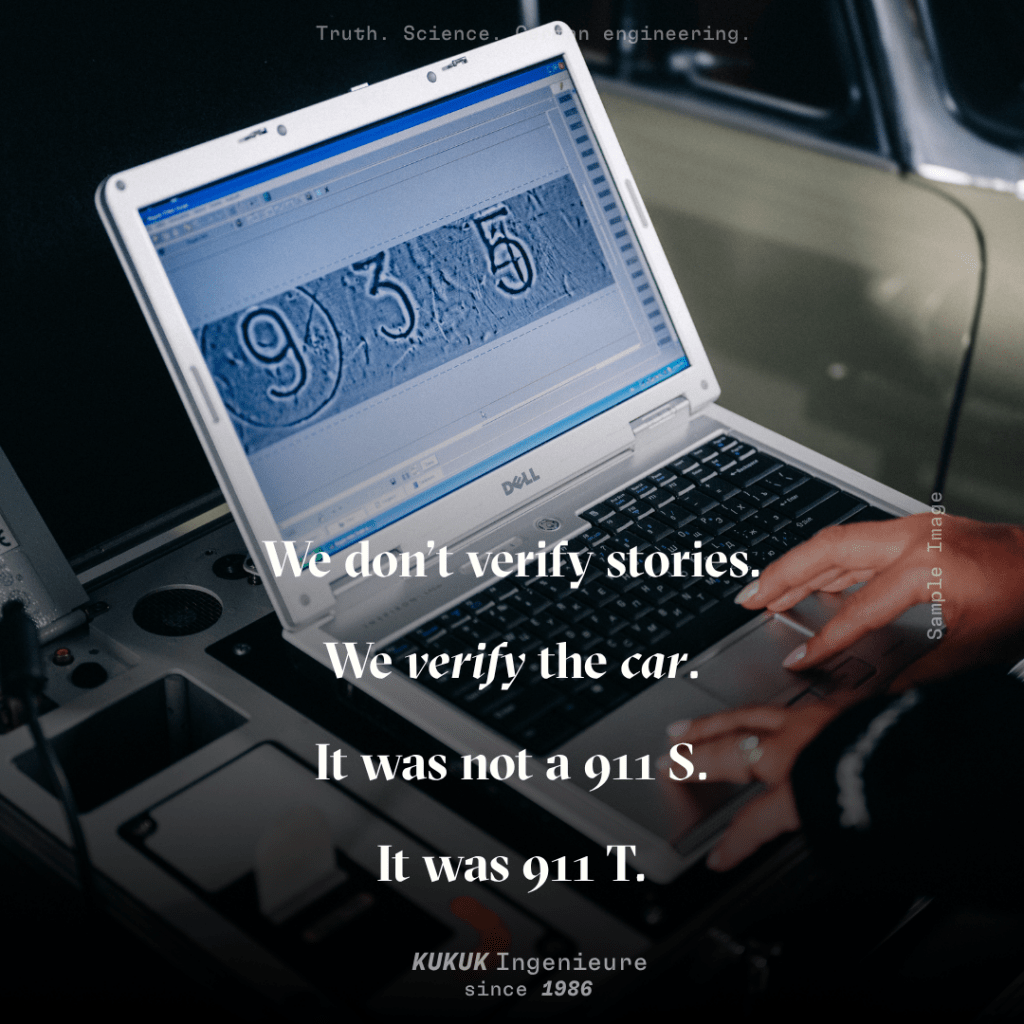
The difference between a 911 T and a 911 S is not just a designation.
It directly influences:
- Market value
- Collector relevance
- Long-term performance
- Decision quality
👉 Different model = different value logic
In this particular case, that meant:
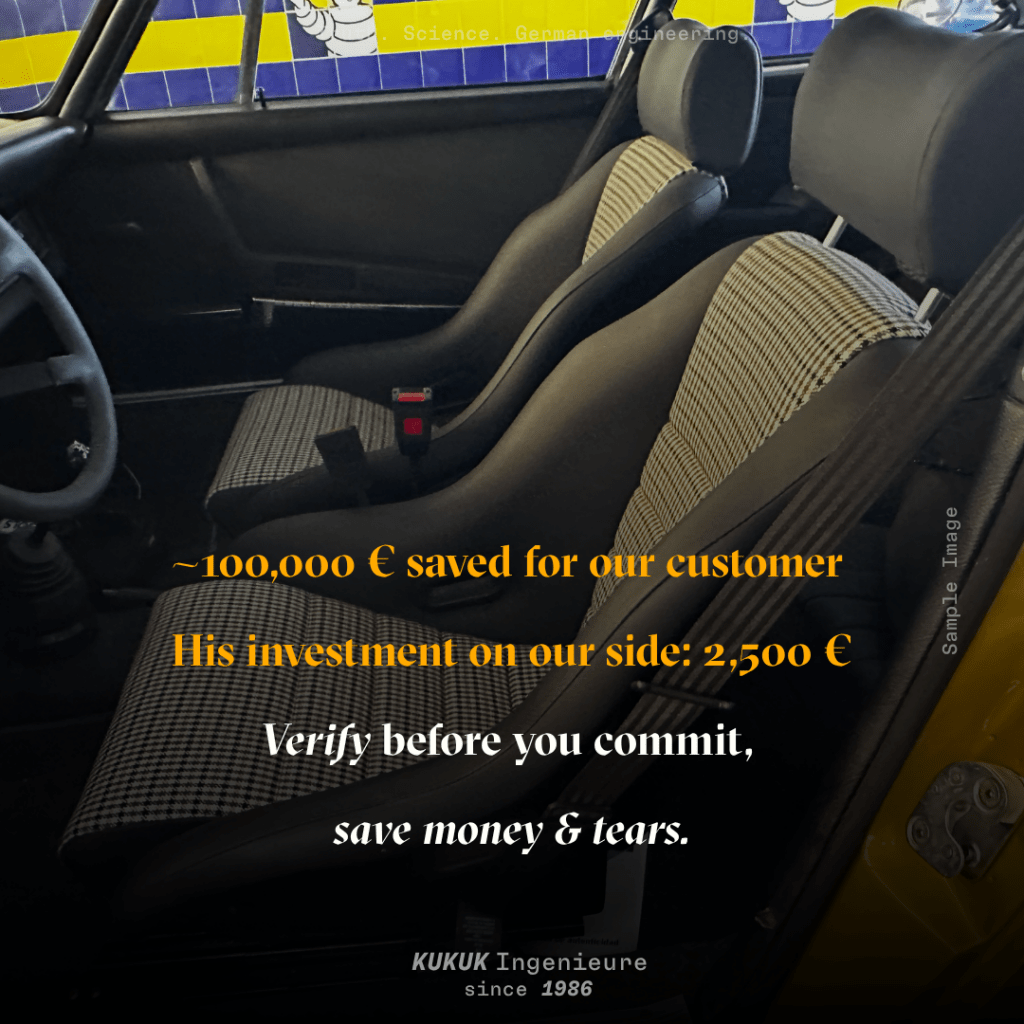
A potential difference of over 100.000 €
The result: Clarity instead of risk
The situation could be clearly assessed through structured analysis.
The consequence:
Purchase decision has been adjusted
Mistake avoided
To create transparency
Cost of Examination: 2.500 €
Avoidable loss over €100,000
The real insight
In such cases, it's not about spectacular damage or obvious defects.
It is about something more subtle but more crucial:
👉 Consistency
Do the identity, components, and history align?
Does the vehicle technically correspond to what is claimed?
Because:
A vehicle can appear convincing yet still be misclassified.
What does that mean for buyers?
When it comes to high-quality collector vehicles, the following applies:
The more convincing an offer appears, the more important verification becomes.
Documents alone are no guarantee
Optical does not replace technical analysis
Plausibility is not the same as truth
👉 The greatest danger lies not in the obvious, but in the believable.
Frequently Asked Questions (FAQ)
Isn't the difference between the 911 T and the 911 S easily discernible?
In many cases, yes.
But this is precisely where the challenge lies:
When vehicles are adapted or modified, a very cohesive overall picture can emerge, which appears correct at first glance.
Why isn't the documentation sufficient?
Documents can appear correct without fully reflecting the actual technical reality.
Only the combination of document review and technical analysis provides a reliable statement.
What role does the production number play?
The production number is a central identifier and allows clear allocation to the original model.
She is a crucial element in the verification: if this has not been tampered with
What is specifically checked during a PPI?
A structured PPI includes, among other things:
Consistency check between documentation and vehicle.
Identity verification
Technical analysis
Component evaluation
A PPI should be carried out when a patient has symptoms suggestive of gastro-oesophageal reflux disease (GORD) or where there is significant dyspepsia and symptoms are not controlled by simpler measures.
Always before a final purchasing decision.
Not after that.
Conclusion: Clarity before commitment
The crucial difference in this case was not visible at first glance.
He lay in the depths.
👉 Not what a vehicle appears to be is crucial
👉 but what it actually is
Before a price becomes binding, this question should be answered clearly.
Call to Action
👉 Anfrage Pre-Purchase Inspection (PPI)
Concluding thought
Different model. Different value.
And the difference doesn't start with the price.
But in truth.


 German
  English
  Italian
  French
  Chinese
  Spanish