Buying a classic car often feels like a moment.
A glance, a feeling, a connection. But in truth, it is something else: a decision for many years.
Not for handover day.
But for everything that comes after.
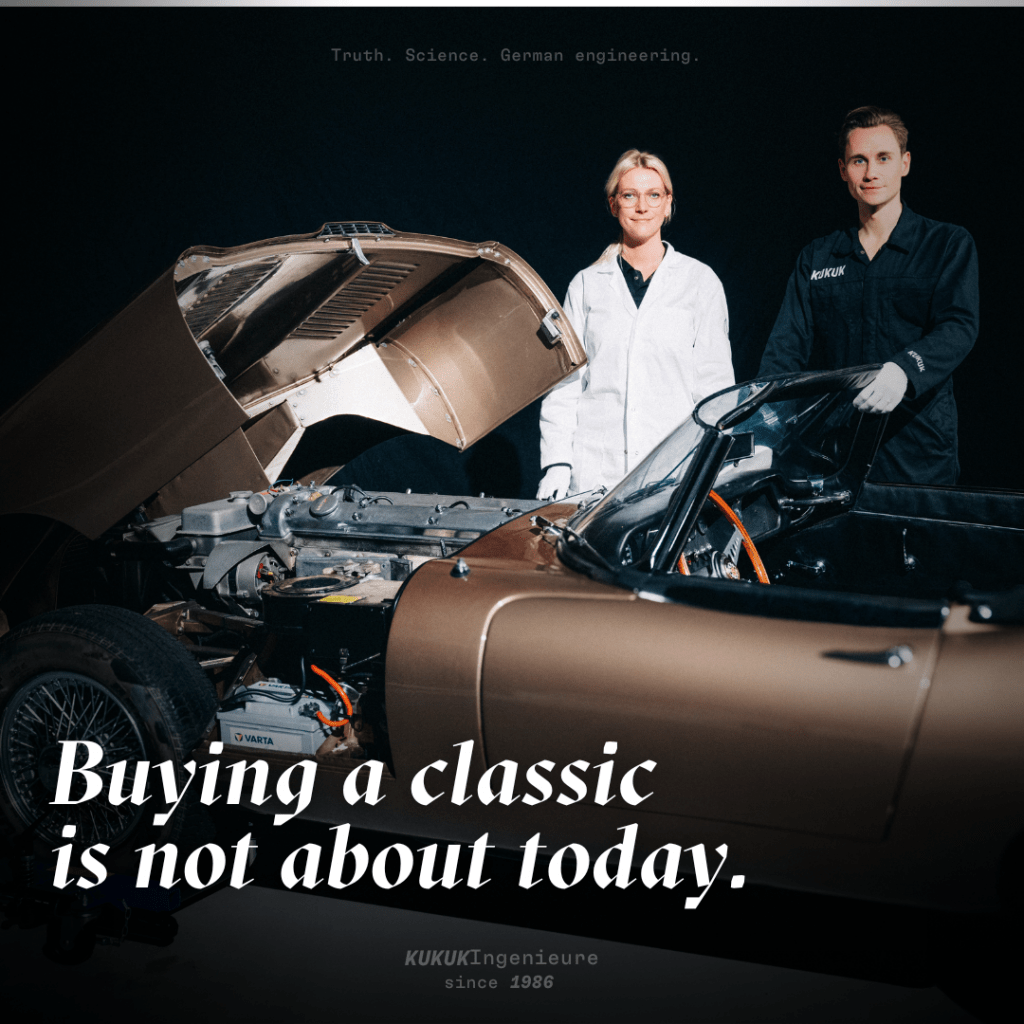
It's about long-term ownership
A classic accompanies its owner for more than just one season.
It is driven, looked after, maintained sometimes for decades.
What seems solid today must also stand the test of time tomorrow. This is precisely why a serious purchasing decision begins not with emotion, but with substance. Long-term ownership means technical, financial, and historical responsibility.
Unseen problems grow with time
Small deviations rarely stay small.
What is invisible today will become larger with use, load, and age.
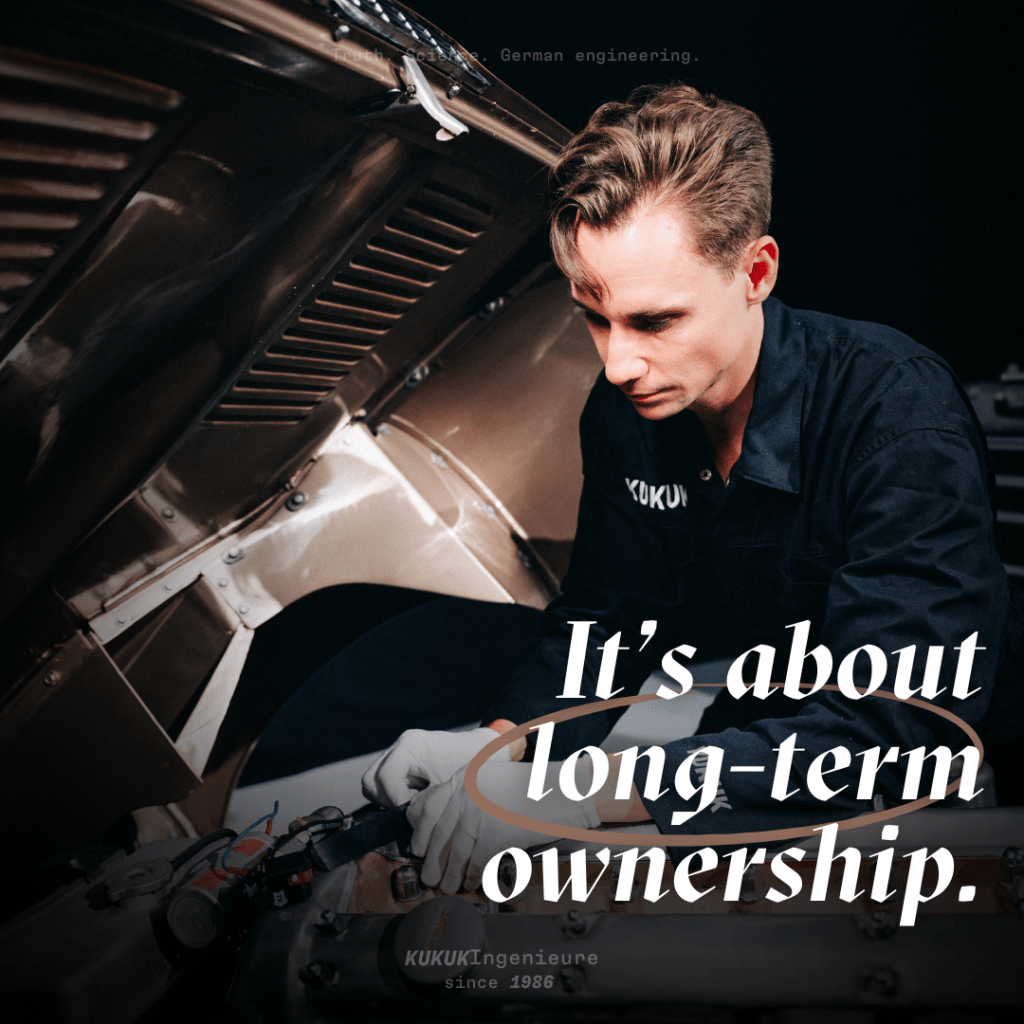
Undiscovered technical defects, undocumented interventions, or untested components develop insidiously until they become expensive, complex, or value-reducing. Time spares nothing that was never checked.
Engineering work protects future value
Value is not created through assertions, but through proof.
Engineering means measuring, comparing, analysing, not guessing.
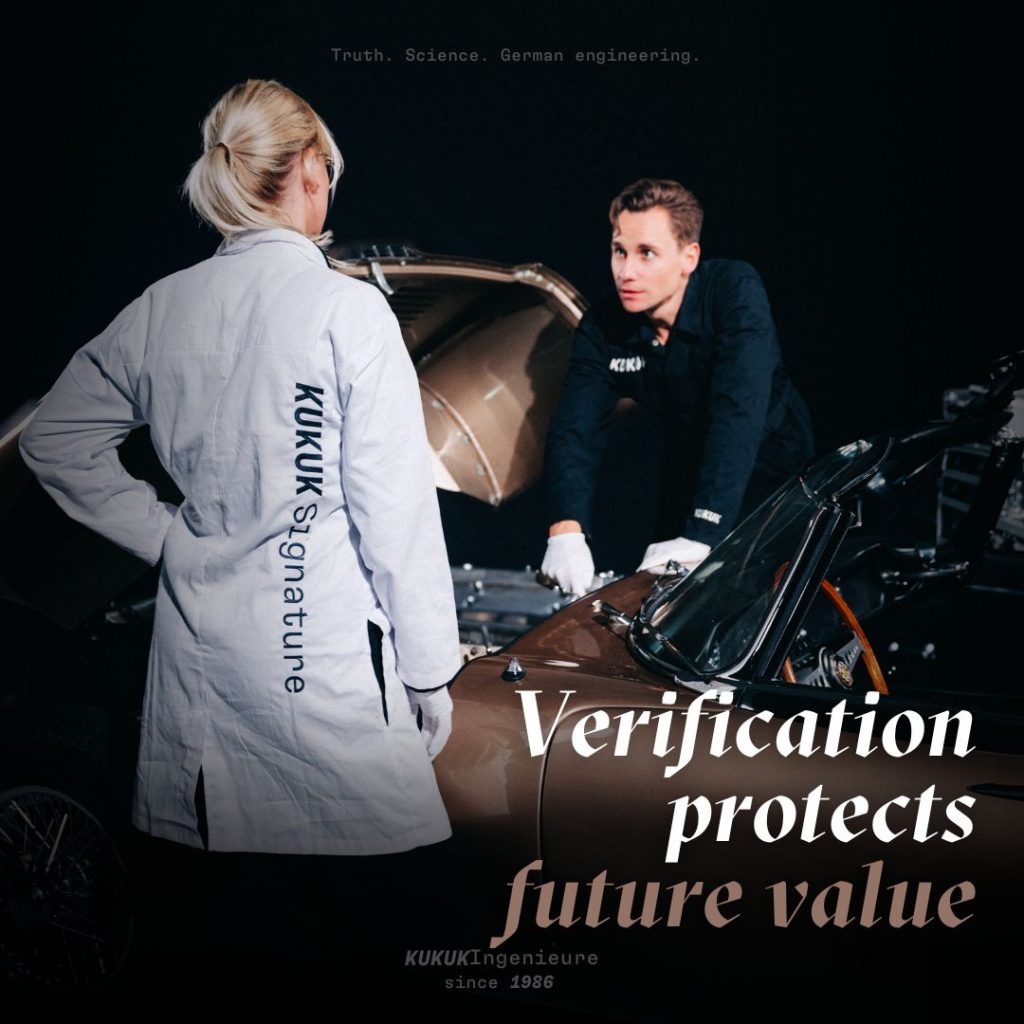
Structured technical inspections allow risks to be identified early. This not only protects against surprises but also against long-term value depreciation. Because stability in condition means stability in market value.
Decisions need facts, not assumptions
A classic car is a technical system.
And every system can be checked.
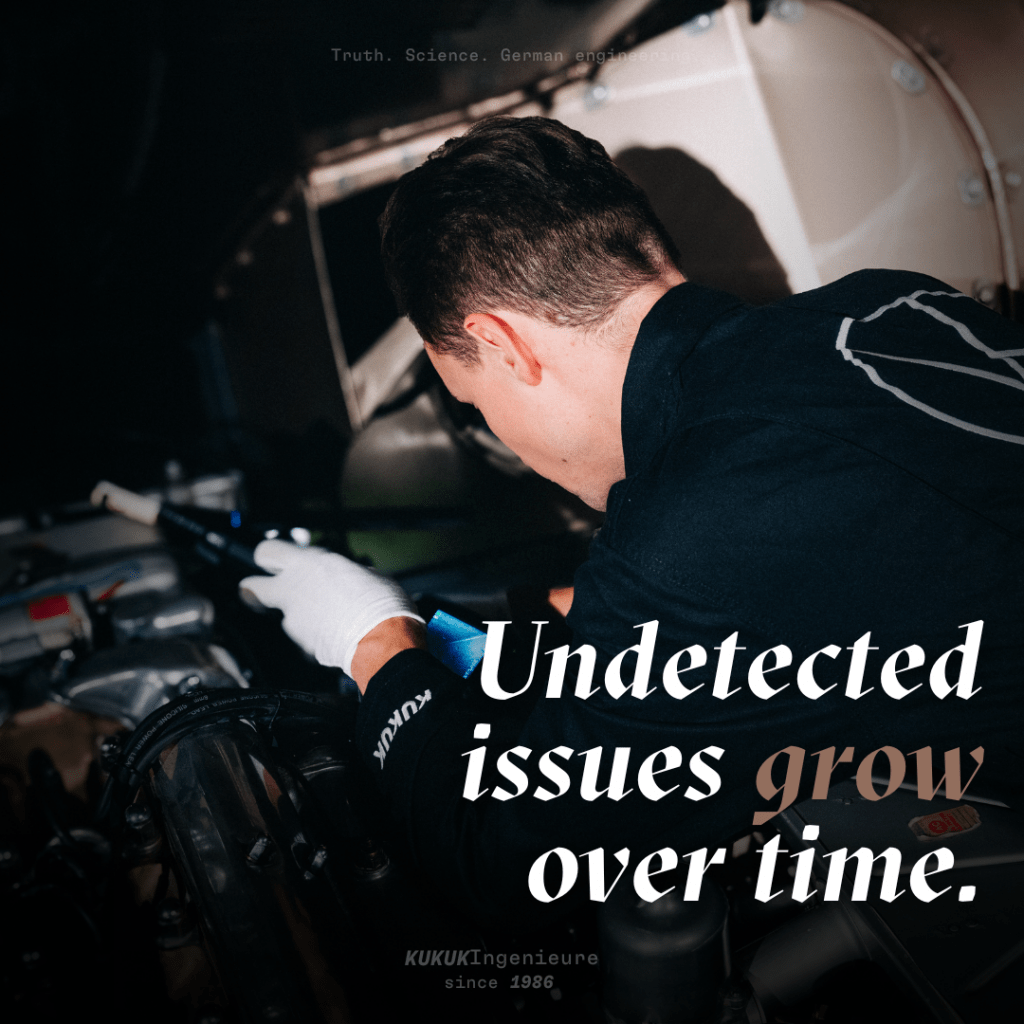
Measurements, material analyses and detailed investigations show what is really present and what is missing. These facts form the basis for sound decisions, regardless of appearance or presentation.
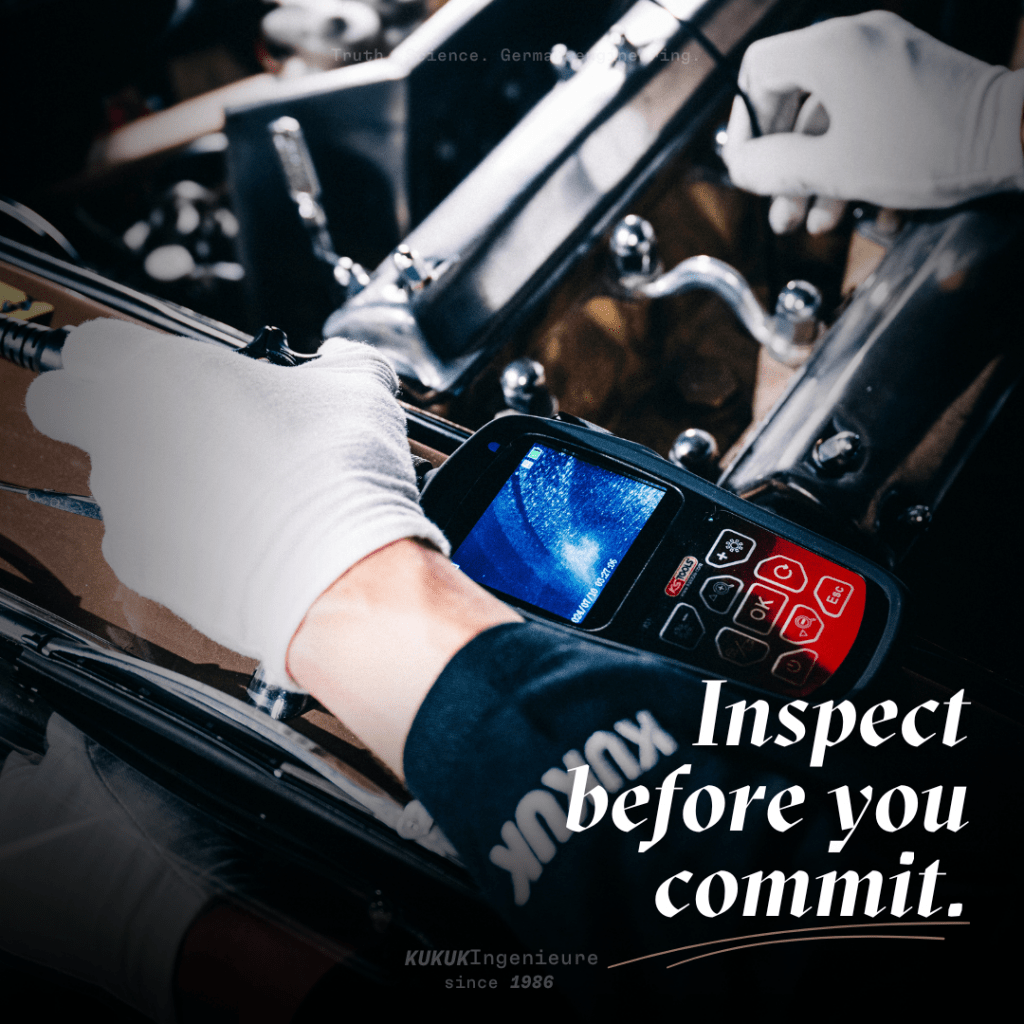
Check before you commit
The most important step always comes before the purchase.
Not after that.
Those who check before they commit consciously decide against acting impulsively. Technical clarity creates security, trust, and long-term satisfaction. This is precisely where short-term impression is separated from sustainable ownership.
Conclusion: Those who think of tomorrow, check today
A classic vehicle is not an impulse purchase.
It is an investment in time, history, and the future.
He who checks carefully today protects tomorrow's value.
Not emotional.
But comprehensible, technical and well-founded.
FAQ Frequently Asked Questions about Buying a Classic Car
Eine technische Prüfung vor dem Kauf eines Oldtimers ist aus mehreren wichtigen Gründen unerlässlich. Erstens hilft sie dabei, versteckte Mängel aufzudecken, die Sie beim Kauf übersehen oder die der Verkäufer möglicherweise nicht kennt (oder wissentlich verschweigt). Dazu können Rost an kritischen Stellen, Probleme mit dem Motor oder Getriebe, Probleme mit dem Fahrwerk oder elektrische Defekte gehören. Zweitens gibt Ihnen eine technische Prüfung eine klare Vorstellung vom tatsächlichen Zustand des Fahrzeugs und den möglichen Kosten für Reparaturen oder Wartung in der nahen Zukunft. Dies ist besonders wichtig bei Oldtimern, da Ersatzteile teuer und schwer zu beschaffen sein können. Mit diesem Wissen können Sie eine fundiertere Entscheidung treffen, ob der Kaufpreis angemessen ist. Drittens kann die Prüfung als Verhandlungsbasis dienen. Wenn Probleme gefunden werden, können Sie diese nutzen, um den Verkäufer zu bitten, den Preis zu senken oder die Reparaturen vor dem Verkauf durchzuführen. Viertens ist es ratsam, einen Sachverständigen mit Erfahrung im An- und Verkauf von Oldtimern zu beauftragen. Dieser kann Ihnen nicht nur helfen, potenzielle Probleme zu erkennen, sondern auch die allgemeine Marktgängigkeit und den Wert des Fahrzeugs beurteilen. Zusammenfassend lässt sich sagen, dass eine technische Prüfung das Risiko eines kostspieligen Fehlkaufs erheblich reduziert und Ihnen hilft, eine kluge und preiswerte Investition zu tätigen.
Because classic vehicles are complex technical systems. Visual inspections or test drives only show part of the reality. Only measurements, material analyses, and structured tests make risks visible that are relevant in the long term.
What risks arise without an independent audit?
Undocumented repairs, material fatigue, inconsistent performance or untested components can lead to high costs, loss of value or legal problems over time.
Is an expert report or an appraisal sufficient?
Not every expert report carries out a technical inspection in depth. An engineering-based investigation assesses not only the condition, but also Plausibility, consistency and traceability all technical components.
When should an examination take place?
Before buying. Late-stage discoveries are usually expensive. Preventative checks protect against wrong decisions and create negotiation security.
For whom is an independent engineering audit useful?
For buyers, collectors, investors, insurers, and all who plan for long-term ownership and wish to preserve value.
If you want to secure the value of a classic vehicle long-term,
Takes the first step before to the purchase.
Contact us for an independent, engineering-based inspection of your classic car.
Well-founded. Comprehensible. Documented.


 German
  English
  Italian
  French
  Chinese
  Spanish